 | James S. and Susan W. Aber |
| Kites | Kite line & gloves |
| KAP trailer | KAP rigs and cameras |
| Cargo dolly | Helium blimp |
| Drones vs. kites | References |
| | James S. and Susan W. Aber |
| Kites | Kite line & gloves |
| KAP trailer | KAP rigs and cameras |
| Cargo dolly | Helium blimp |
| Drones vs. kites | References |
The Sutton Flowform was invented by Steve Sutton as a byproduct of his experiments to create a better parachute during the 1970s (Sutton 1999). He tested various parachute designs as kites, which proved quite successful. The flowform is a soft airfoil that employs venting to reduce drag and control air pressure within the kite body. Sutton was granted a U.S. patent for the flowform design in 1974. Flowform kites are known as smooth and stable flyers under moderate to strong wind; they are ideally suited for KAP.
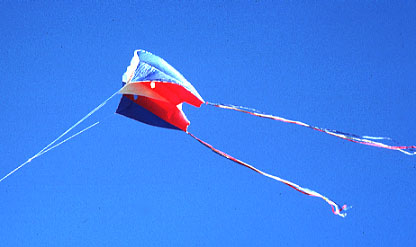 | The Sutton Flowform 16 is a wind-inflated airfoil that flies well in moderate to strong winds (15-25 mph). This side view shows the kite with two 15-foot streamer tails, which greatly improve kite stability. The kite has about 16 square feet (1½ m²) of surface area and weighs about 11 ounces (310 g). Because it has no rigid parts, the kite can be packed into a small stuff-sack about 10 inches (25 cm) long. This kite is the authors' favorite for moderate to strong wind. |
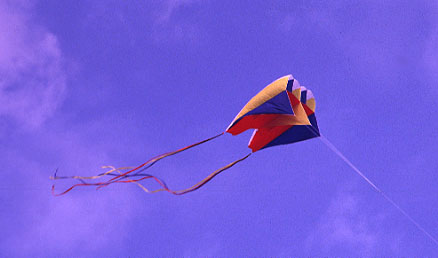 | The Sutton Flowform 30 is next larger size in the Sutton series. It has 30 ft² (2.8 m²) of lifting surface area and weighs about 23 ounces (650 g). The kite is flying here with two 15-foot streamer tails. This kite develops substantial lift in a moderate wind; for KAP it is utilized for relatively light wind (10-15 mph). |
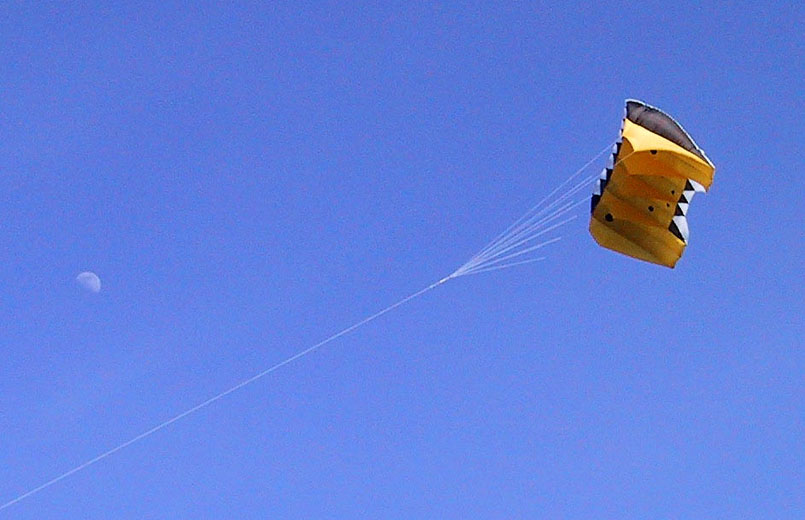
| The SkyFoil measures 10 feet wide by 8½ feet long giving it 85 square feet (7.9 m²) surface area. It is shown here flying without tails; rising moon is visible to left. This kite displays the school colors—black and gold—of the authors' home base, Emporia State University. Kite purchased from Gomberg Kite Productions. |
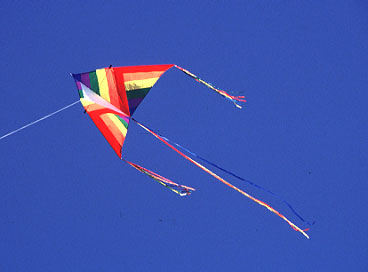 | This Grand Delta has a wing span of nearly 11 feet, a surface area of approximately 30 ft², and weighs about 19 ounces (540 g). Rigid rods support the wings and maintain proper aerodynamic shape of the kite. The kite is flying here with three tails—15-foot streamer in center and 6-foot streamers on wing tips. The large delta is a stable flyer under gentle to moderate wind (10-20 mph). This kite folds into a 36-inch case. |
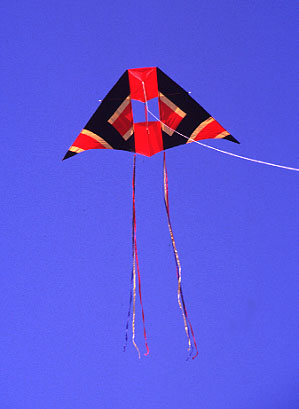 | The delta-conyne is a combination delta and triangular box kite. D-C kites are stable fliers in light wind. This Sun Oak Seminole 13-foot D-C is flying with two 15-foot streamer tails. At 48 ounces (1.4 kg), it is sturdy and reliable, but heavy, which reduces its KAP lifting capacity. It folds into a 48-inch case. The large D-C is utilized for light to moderate wind, and will lift a KAP rig with only 8-10 mph wind aloft. See Sun Oak Kites. |
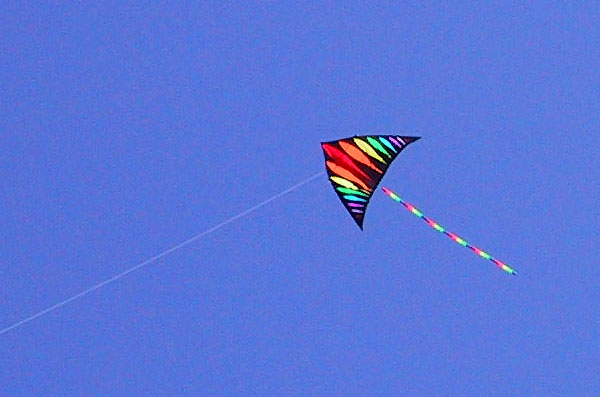 | Giant delta has a wingspan of 19 feet and a total surface area of 88 square feet (8.2 m²). It flies beautifully on 300-pound line in gentle breeze and has excellent lifting power. Seen here with a 20-foot tube tail, it folds into a 4-foot case and weighs only 5 pounds (2¼ kg). |
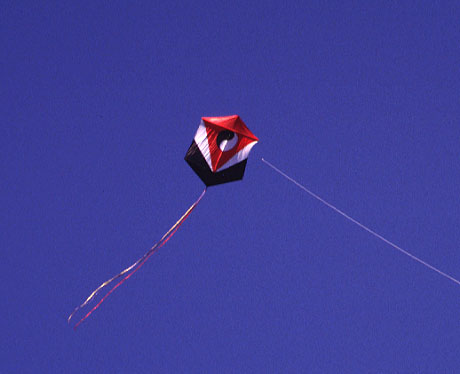 | Daruma rokkaku. This kite, based on a traditional Japanese design, is a good flyer in a light breeze, 5-10 mph (8-15 km/h). It launches on a barely perceptible ground wind and is stable when aloft. Because of its low weight of 19 ounces (540 g), it is the kite of choice for light wind KAP. This kite measures about 6 feet long by 5 feet wide, and is shown here with a 15-foot streamer tail. It folds to 60 inches. |
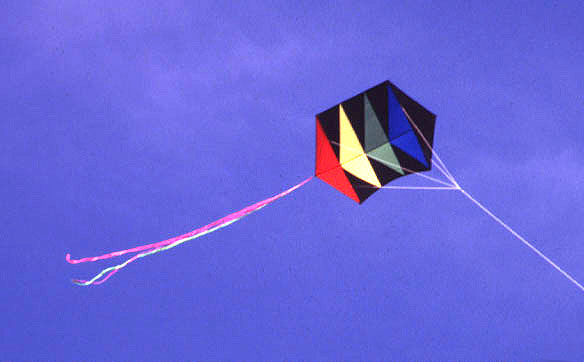 | Giant rokkaku. At 7½ by 6 feet, this big rokkaku has about 36 ft² (3.3 m²) of lifting surface. It develops great pull in light wind and should not be used in wind more than 10 mph (15 km/h). This kite weighs only 27 ounces (760 g) and folds to a compact 42 inches (107 cm) length. It has become the authors' favorite kite for lifting KAP rigs in light wind (less than 10 mph), and it often succeeds when no other kite will fly. |
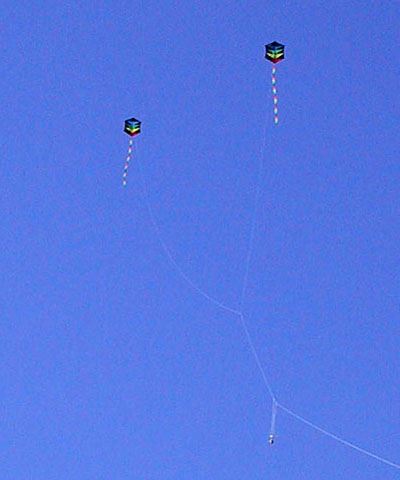 | Kite train. In light wind, multiple kites can greatly increase lifting power and stability for a KAP rig. In this example, two giant rokkakus are lifting a camera rig in a light breeze. The right kite is attached to the main line. The left kite flies on a secondary line, 500 feet (150 m) long, that is connected to the main line via a ring and lark's head knot. The KAP rig is suspended from the main line, well below the attachment point for the secondary kite. |
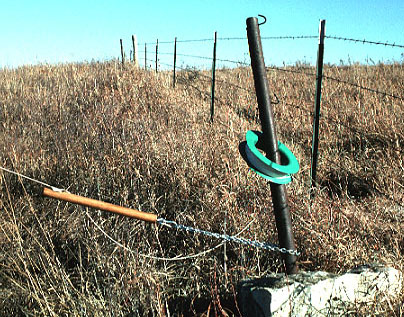
| The 9-inch plastic spool holds about 500 feet of braided dacron line, which has a test strength of 250 pounds. The kite handle has proven indispensible for securing the line. The handle is a wooden rod with an anchor chain at one end and a tie-down cleat at the other. The handle should always be secured to a firm anchor point. |
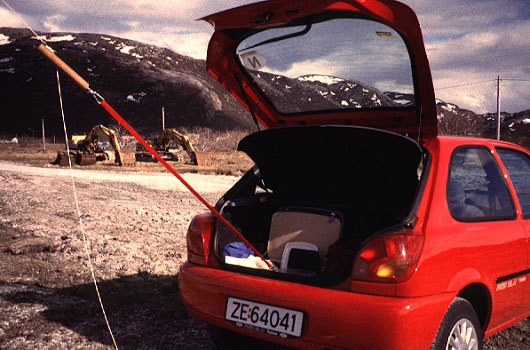
| Kite handle and anchor strap attached to hatch lock of rental car in Norway. The open hatch door provides a small wind break for assembling KAP equipment. This protection is useful in cold weather conditions—note snow on hills in background. |
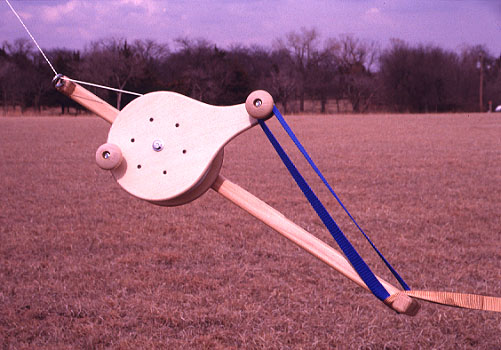
| Large Strato-spool reel for kite line (left). The reel is shown with its "lock" (blue strap) holding the kite line in fixed position. The reel is secured by the brown strap to a ground anchor. Large Strato-spool reel disassembled to show parts (right). |  |
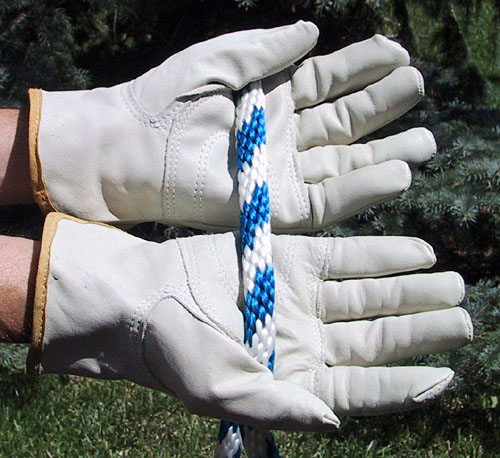
| Horsehide roper gloves for KAP. Note the tight-fitting fingers and extra patch of leather across the palm of the hand. | 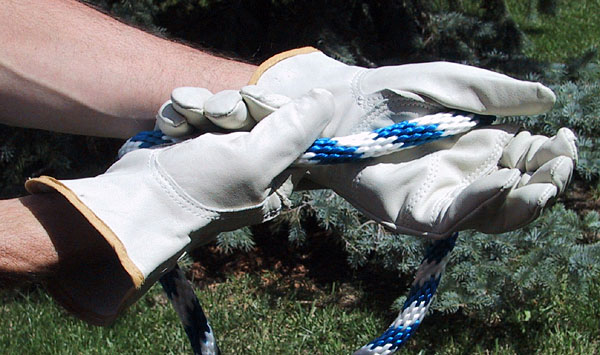 |
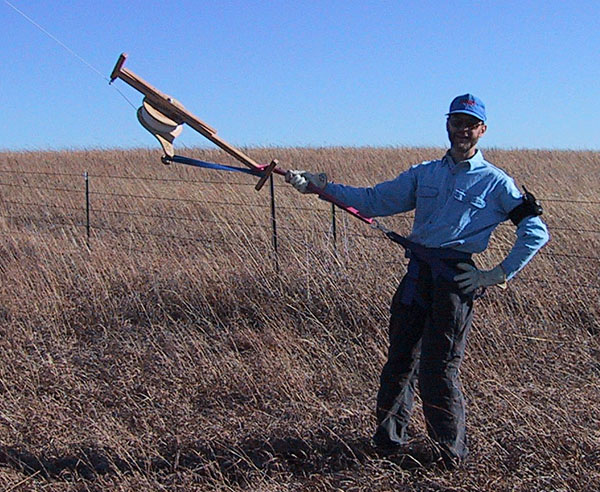
| J.S. Aber demonstrates the mobile harness for KAP. The hip harness is adapted from a climbing safety belt, and a small radio is strapped to the left arm. |
 KAP
knots and hitches.
KAP
knots and hitches.
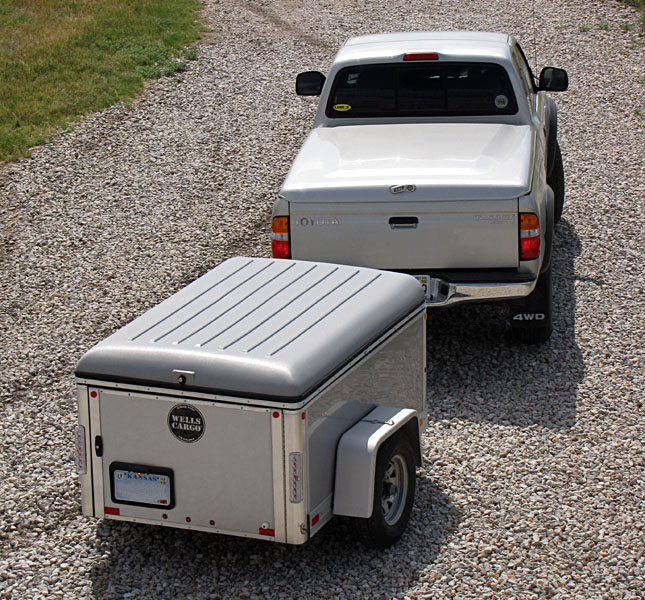
| Wells Cargo small trailer for kite aerial photography. Left: view from above at Cheyenne Bottoms, Kansas. Right: cap open for quick access to equipment. The rear door also opens for loading cargo boxes and other heavy items easily. | 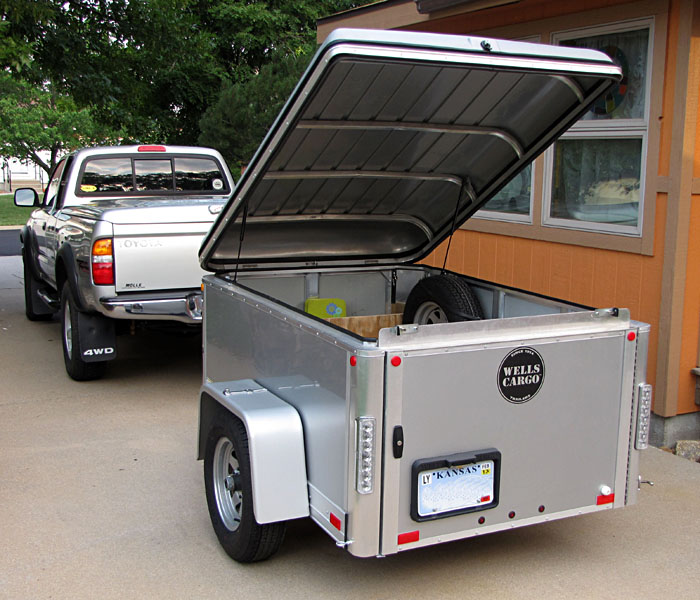 |
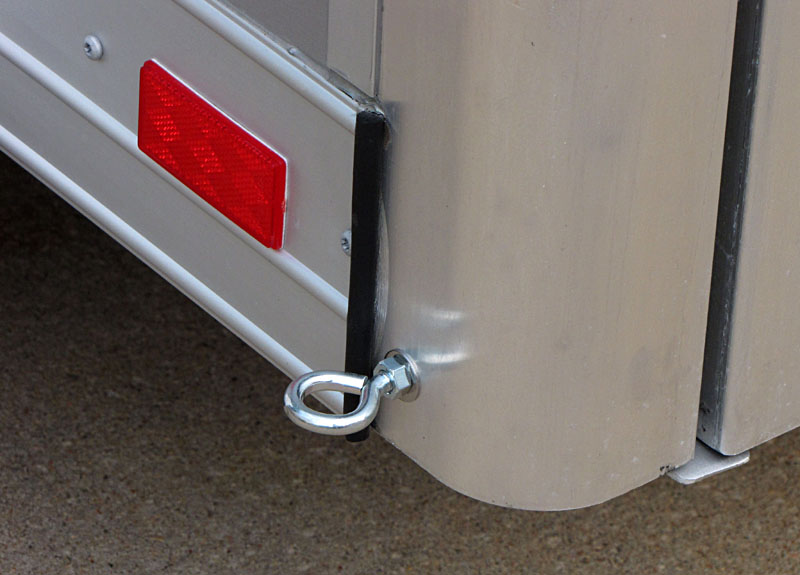
| Close-up detail of eye-bolt added to back corner of trailer to provide an anchor for the kite line/reel. |
During the winter in early 2016, the author (JSA) designed and constructed a dolly based on these wheels and axle kit. The dolly frame is made of 1½-by-¾-inch oak, which is quite strong. The wood was sanded and treated with Danish oil for a waterproof finish. Hardware is mostly brass, aluminium, or stainless steel to prevent rusting. The frame measures 18 inches wide by 36 inches long (excluding the handle). When moving the dolly, the front legs fold up and are held by a magnet.
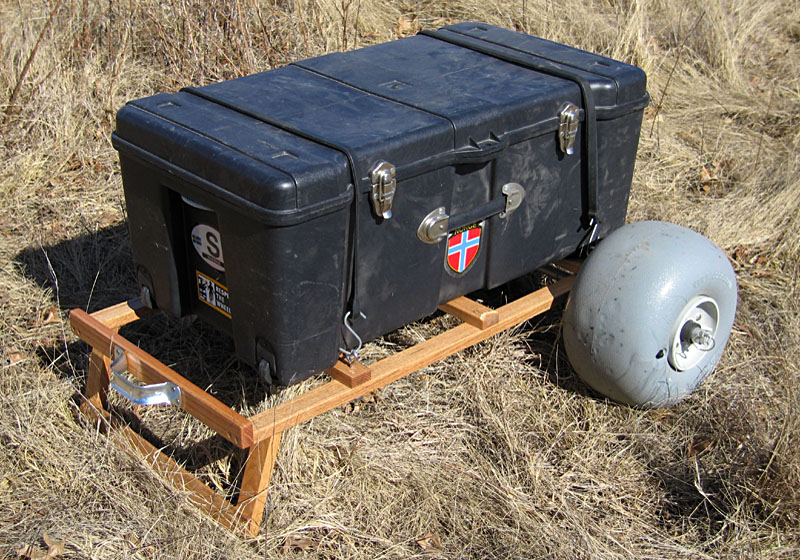
| Field testing the dolly in rough prairie and wet meadow terrain. The dolly is designed to be pulled over loose sand, mud, and other soft soils or rough surfaces. |
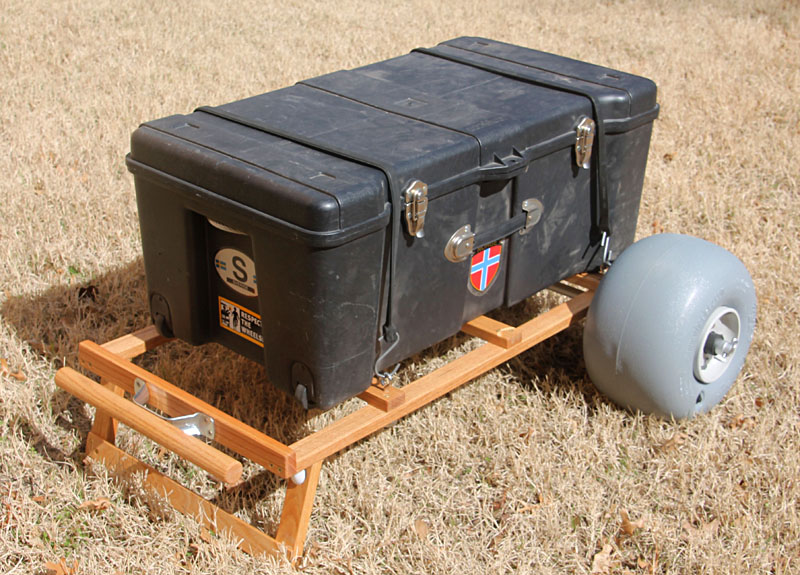
| Front and rear views of the completed dolly with cargo box held on by rubber straps. Note the back stops (right) to prevent the box from slipping off the back end. | 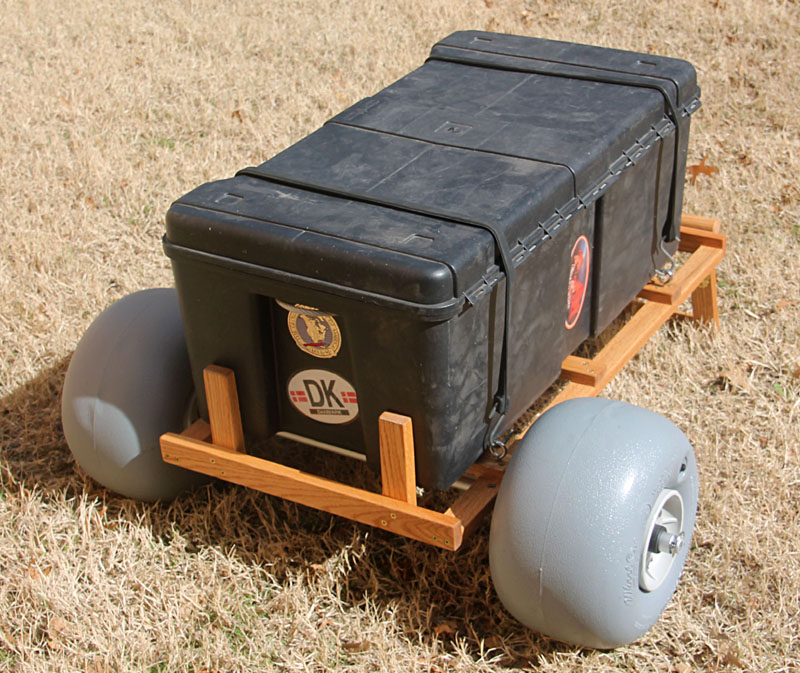 |
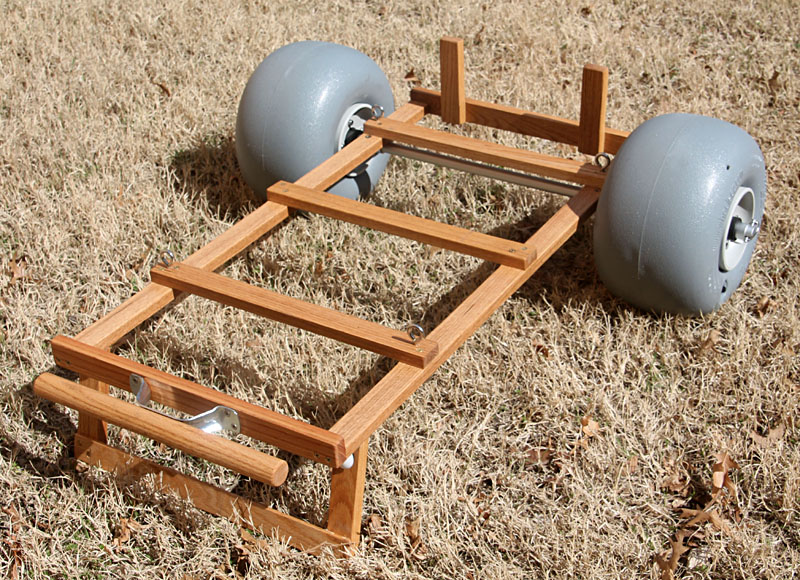
| Cargo dolly frame (left) and close-up view of the front end (right). The front legs fold back against the frame and are held in place by a magnet. The round handle was added after field testing for better grip. | 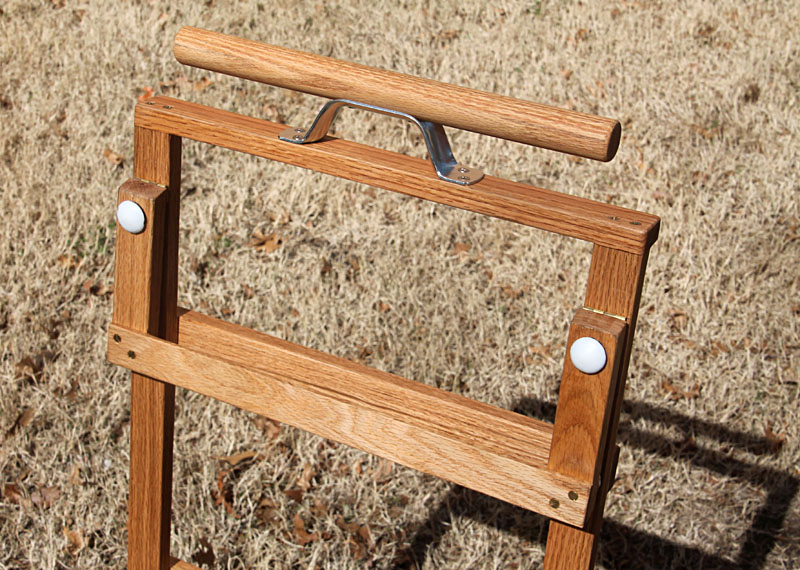 |
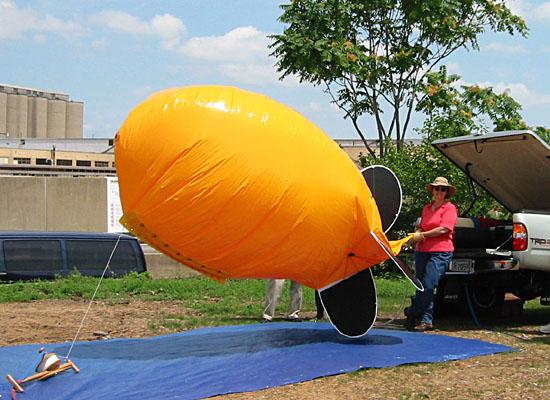
| SWA inflates the blimp from a helium tank in the back of the small pickup truck (left). Near-vertical self-portrait of the authors with blimp shadow (right). The blue tarp to left is laid out for inflating and deflating the blimp. | 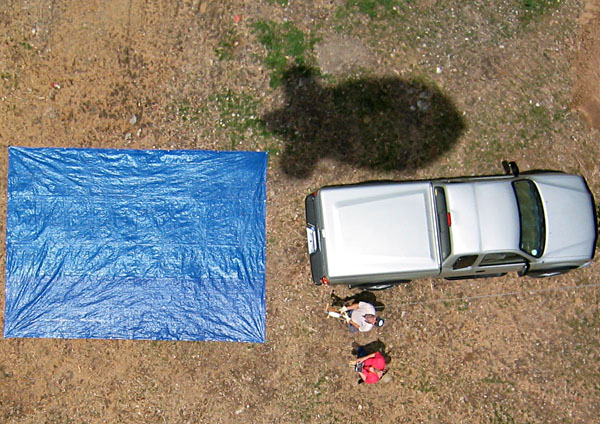
|
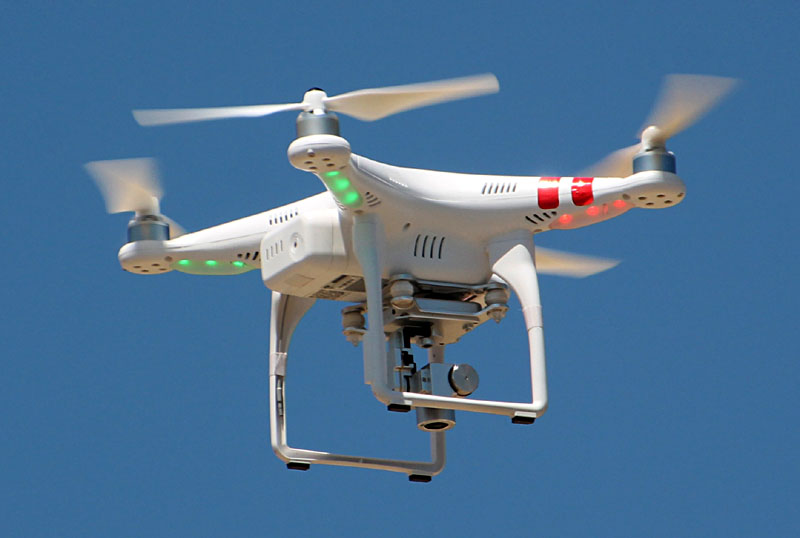
| In flight dji Phantom drone similar to the type tested by Powers and Iannacone for kite collisions. High-speed prop rotation is the primary risk for cutting kite fabric or wrapping up the kite line. Similar damage could be expected for drone-blimp collisions. | 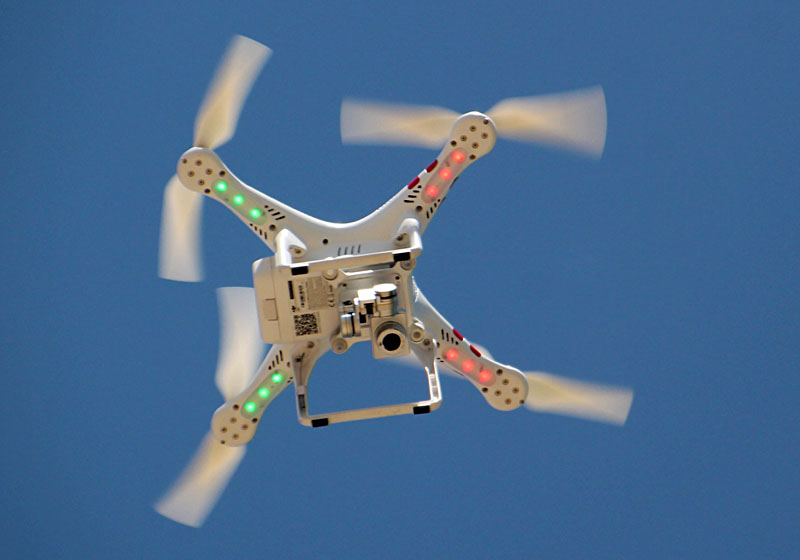
|
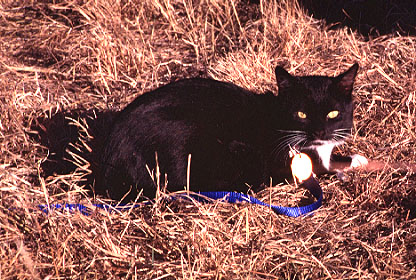 | The authors' late kitten, Oreo, is seen here at 6 months age (2/99). He is content to sit and watch the kites "dance" in the air above. |
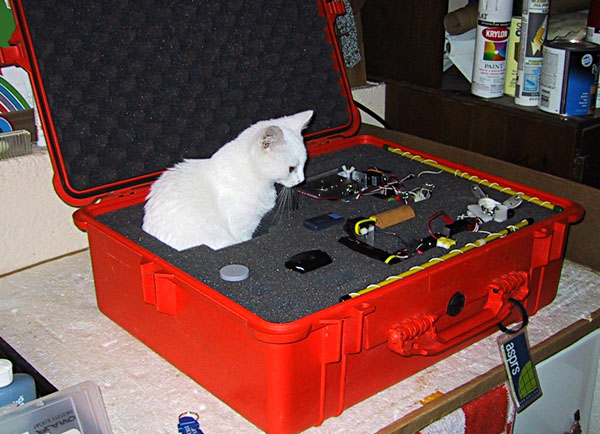 | Kumiko, kitten of the authors' son, is helping to pack the camera equipment case. Seen here at age four months (6/03). |
 Return to
KAPhome.
Return to
KAPhome.
All text and images © by the authors.
Last update July 2016.
 Table of Contents